The Patents

Every patent I can find for the little board, from 1868 to 1997: the writers with their pencils, the pointers of the talking board, and the few that took the name and nothing else; with their drawings, and the patents themselves to read.

A NOTEVery Few Writers

The writing planchette was never much patented. It came from the séance circles of Paris in 1853 already finished, a little board on two castors with a pencil for its third foot, and by the American craze of 1868 every maker had one and none of them owned the idea. What the patent offices saw, again and again, was its cousin: the pointer that moves over a printed alphabet. So this page holds the few writers I can find, the pointers from Elijah Bond's Ouija patent of 1891 onward, and three inventions that borrowed the word planchette for something else entirely. Click any sheet to see it full size; every patent can be read in full.

The dials, psychographs and spirit wheels, which are a different family again, are collected with Professor Hare's spiritoscope at spiritoscopes.com.
I.The Writers

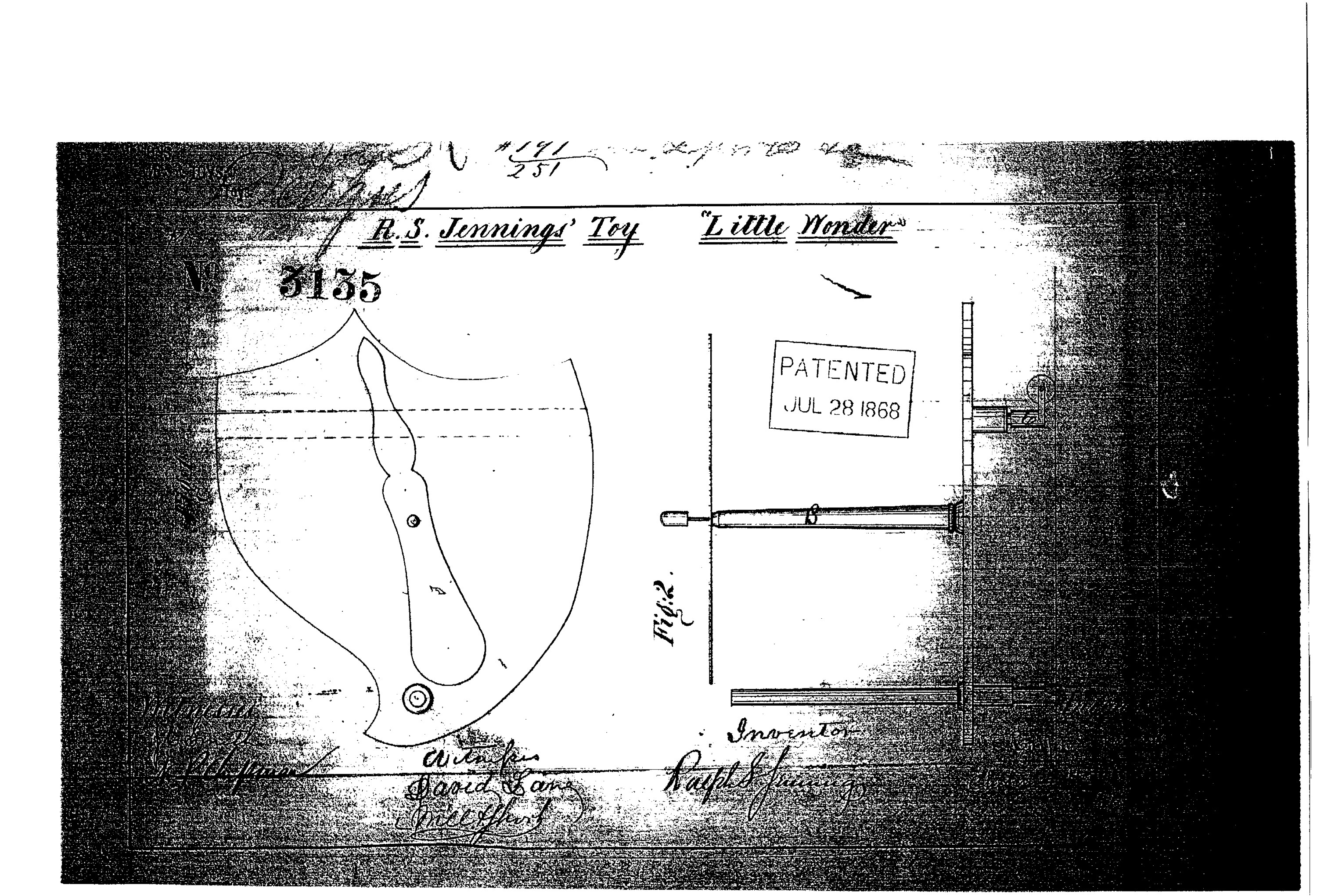
US Design 3,135, Design for a Toy (the Planchette), sheet 1
Design for a Toy (the Planchette) US Design 3,135 · Ralph S. Jennings, New York Granted 28 July 1868 The first American patent I can find for a writing planchette, from the year of the great craze, and only a design: the shape of the board, and the standard and castors beneath it. The sheet is endorsed by hand: R. S. Jennings' Toy, Little Wonder. Kirby, Moulton, Williams and Cottrell sold theirs without a patent that I have found. The full patent (PDF, 301 KB) · Google Patents
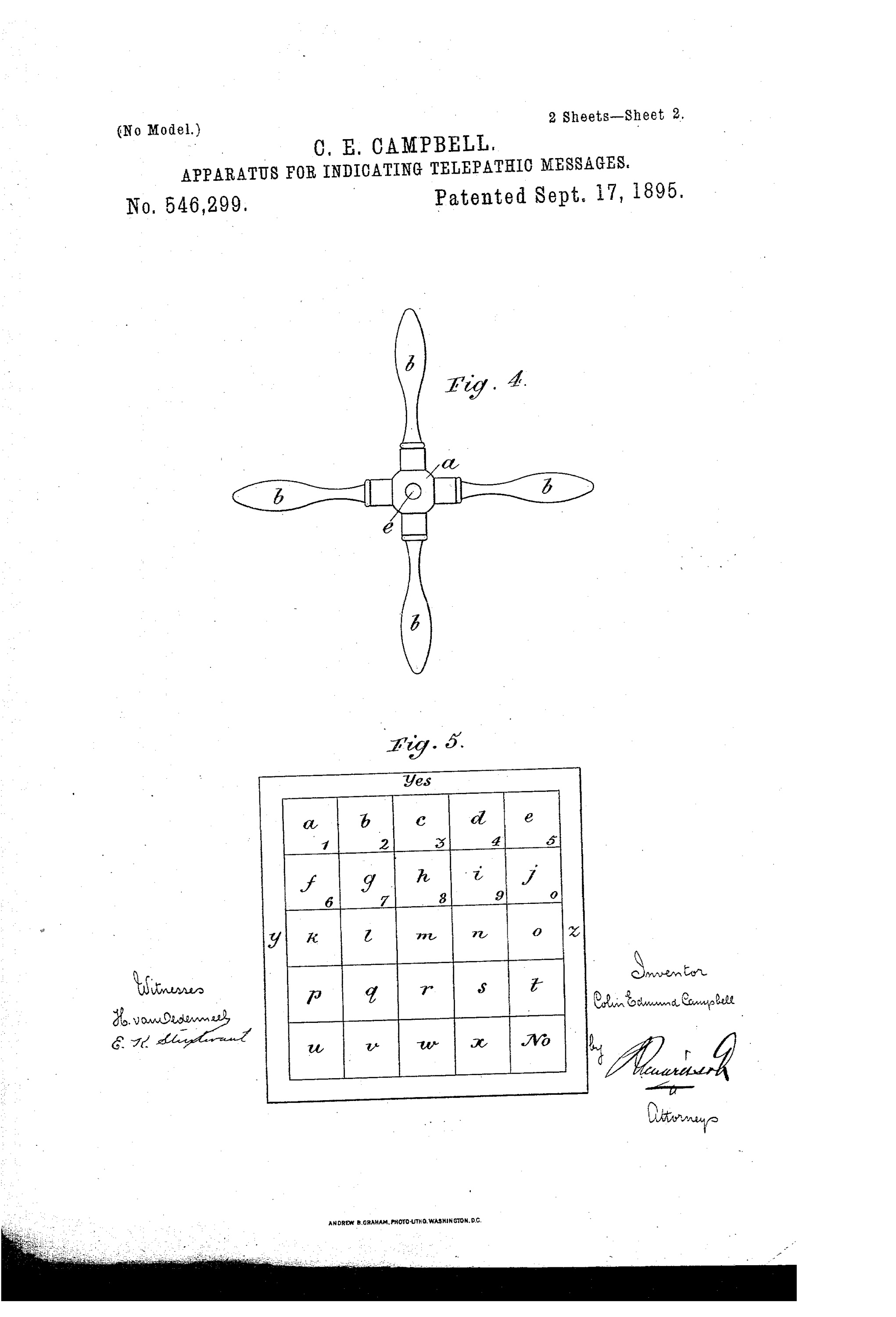
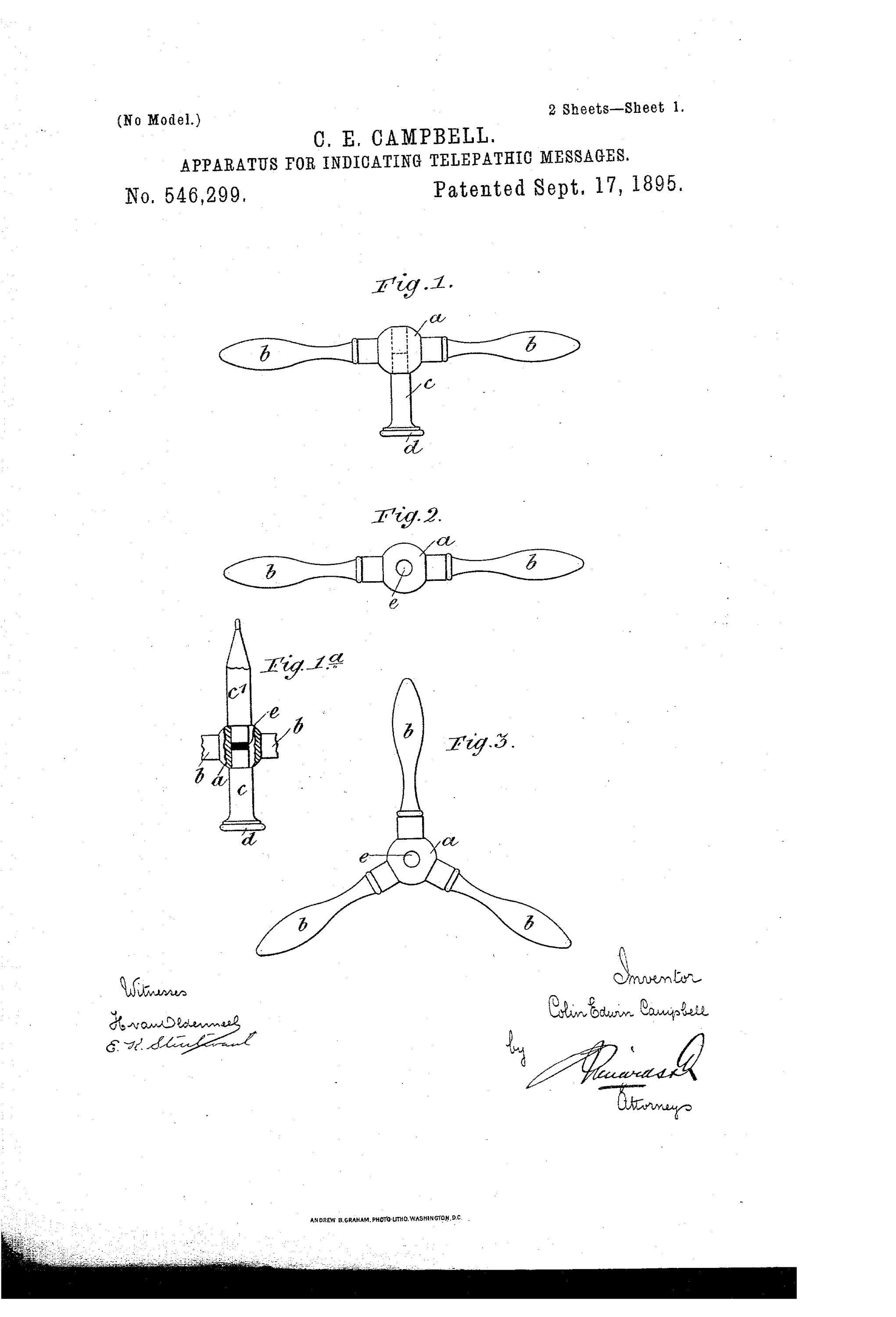
US 546,299, Apparatus for Indicating Telepathic Messages, sheet 1US 546,299, Apparatus for Indicating Telepathic Messages, sheet 2
Apparatus for Indicating Telepathic Messages US 546,299 · Colin Edmund Campbell, London, England Granted 17 September 1895 A boss with radiating handles and a smooth foot, to travel over a lettered chart, or with a pencil in place of the foot, to write on plain paper. The spirits have become telepathy; the pencil is still there. The full patent (PDF, 245 KB) · Google Patents
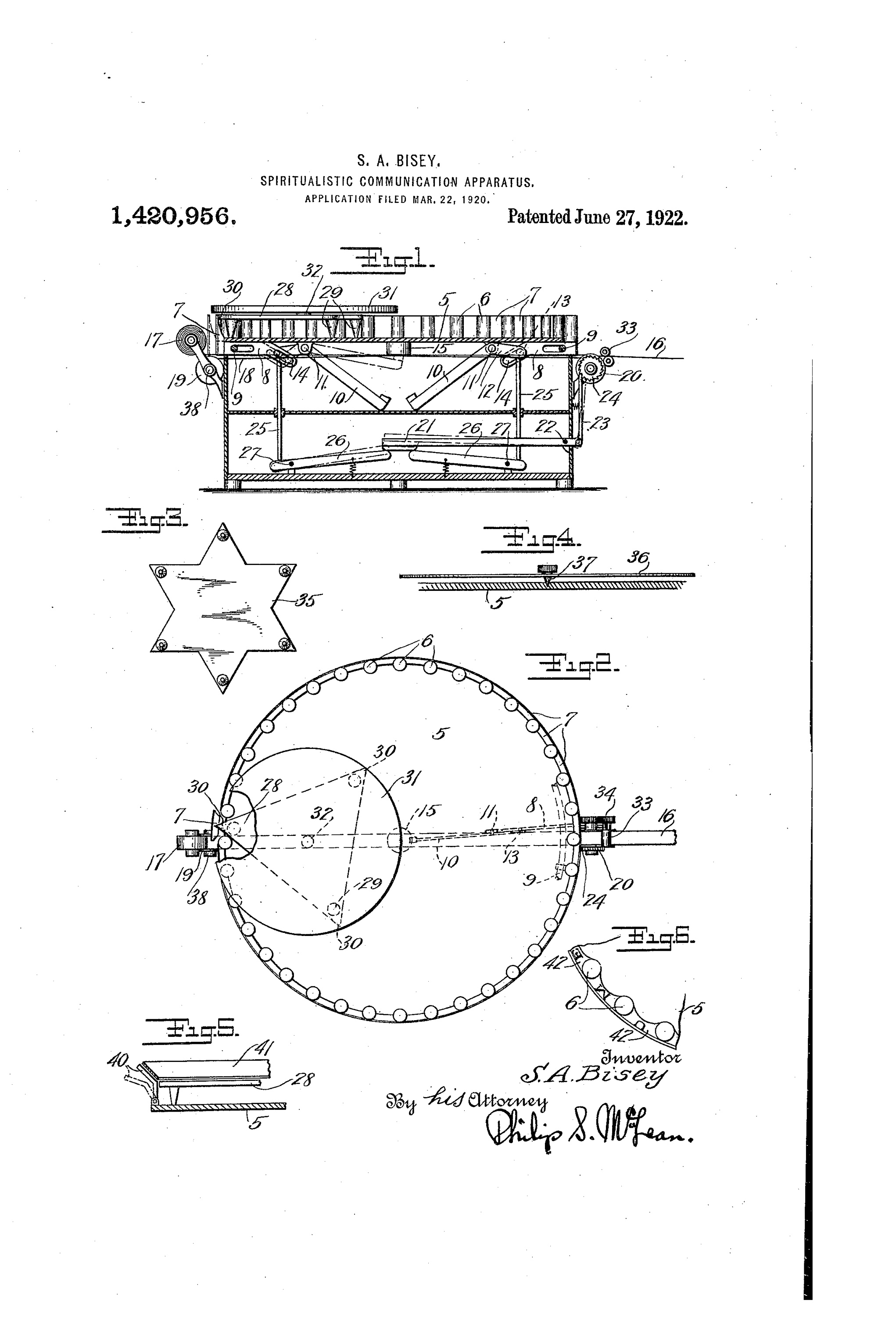
US 1,420,956, Spiritualistic Communication Apparatus, sheet 1
Spiritualistic Communication Apparatus US 1,420,956 · Sunker Abaji Bisey, New York Filed 22 March 1920 · granted 27 June 1922 The planchette that prints. Its points press into pockets around the rim of a table, each driving a slide and a type bar that strikes a central platen, so that the message comes out typed on a paper tape. The full patent (PDF, 430 KB) · Google Patents
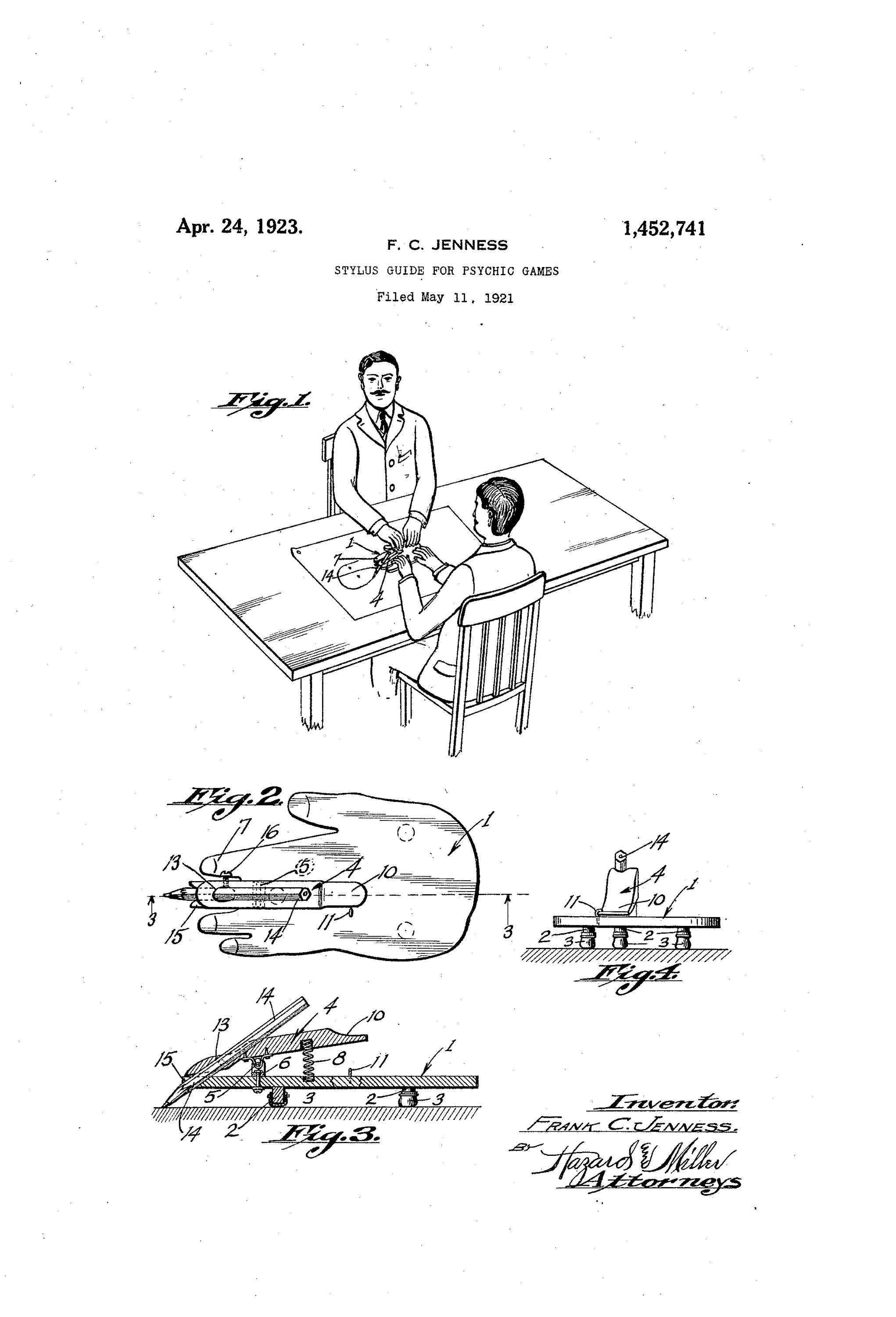
US 1,452,741, Stylus Guide for Psychic Games, sheet 1
Stylus Guide for Psychic Games US 1,452,741 · Frank C. Jenness, Los Angeles, California Filed 11 May 1921 · granted 24 April 1923 A planchette whose pivoted bar holds an ordinary lead pencil in an inclined opening at the front, pressed to the paper by a spring; swing the bar up and hook it, and the pencil is held clear. The base slides on cloth-covered feet. The drawing shows the sitters at the table. The full patent (PDF, 281 KB) · Google Patents
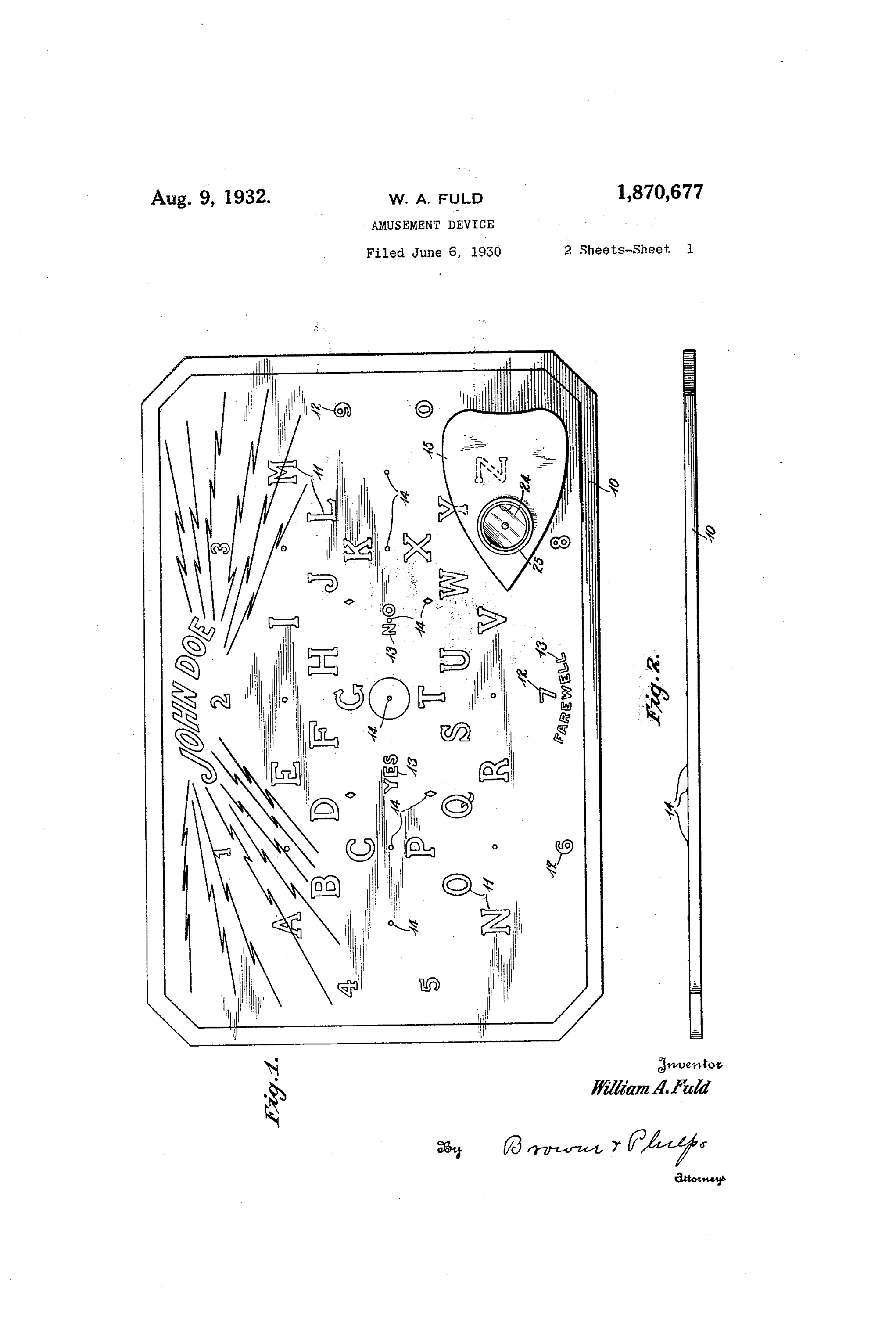
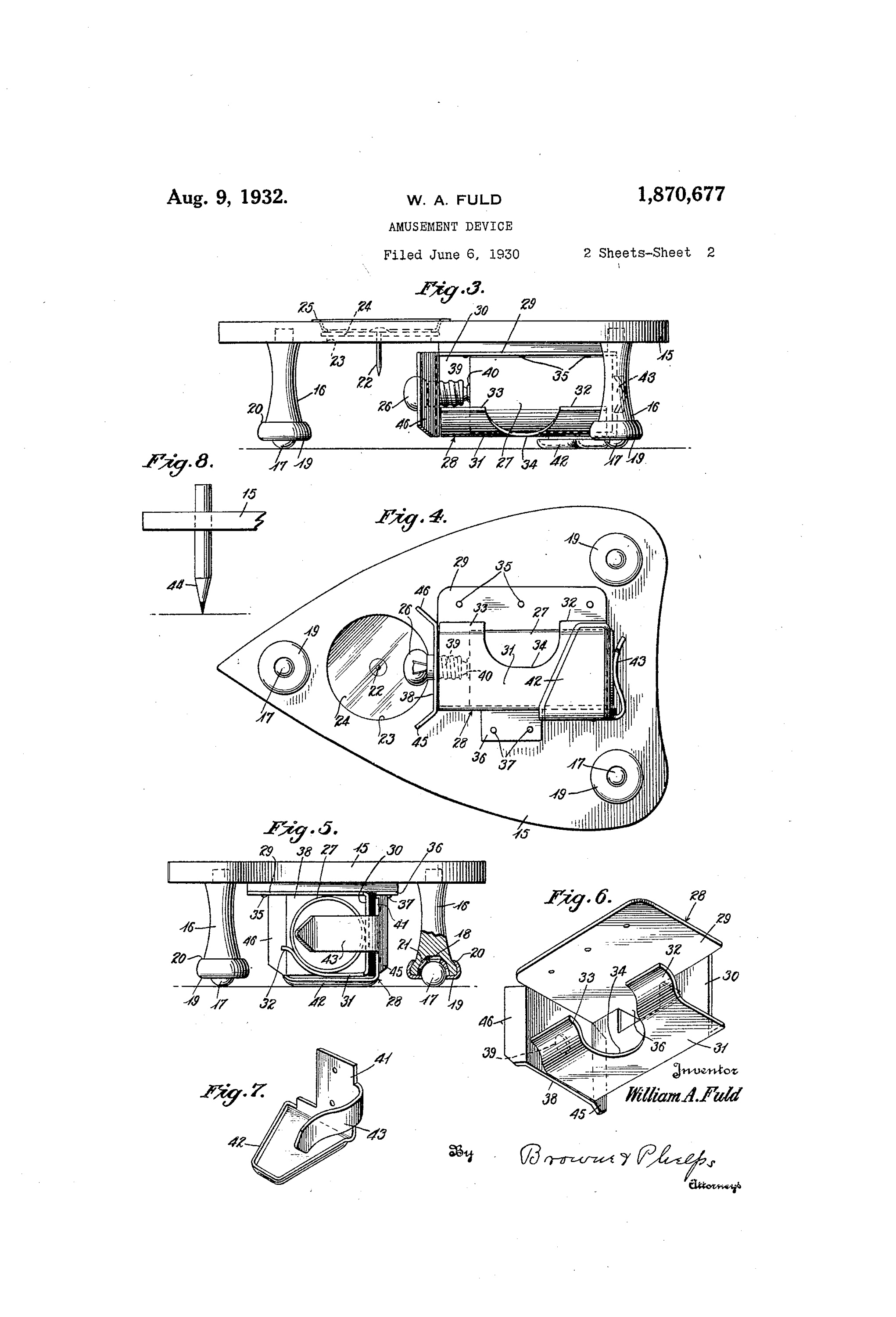
US 1,870,677, Amusement Device, sheet 1US 1,870,677, Amusement Device, sheet 2
Amusement Device US 1,870,677 · William A. Fuld, Baltimore, Maryland Filed 6 June 1930 · granted 9 August 1932 The electric planchette of the next generation of the Fuld family: a plaque on ball-bearing feet carrying a battery and a lamp, whose switch closes over studs among the characters and lights the one beneath. The specification allows a pencil in place of the pointer. The full patent (PDF, 418 KB) · Google Patents
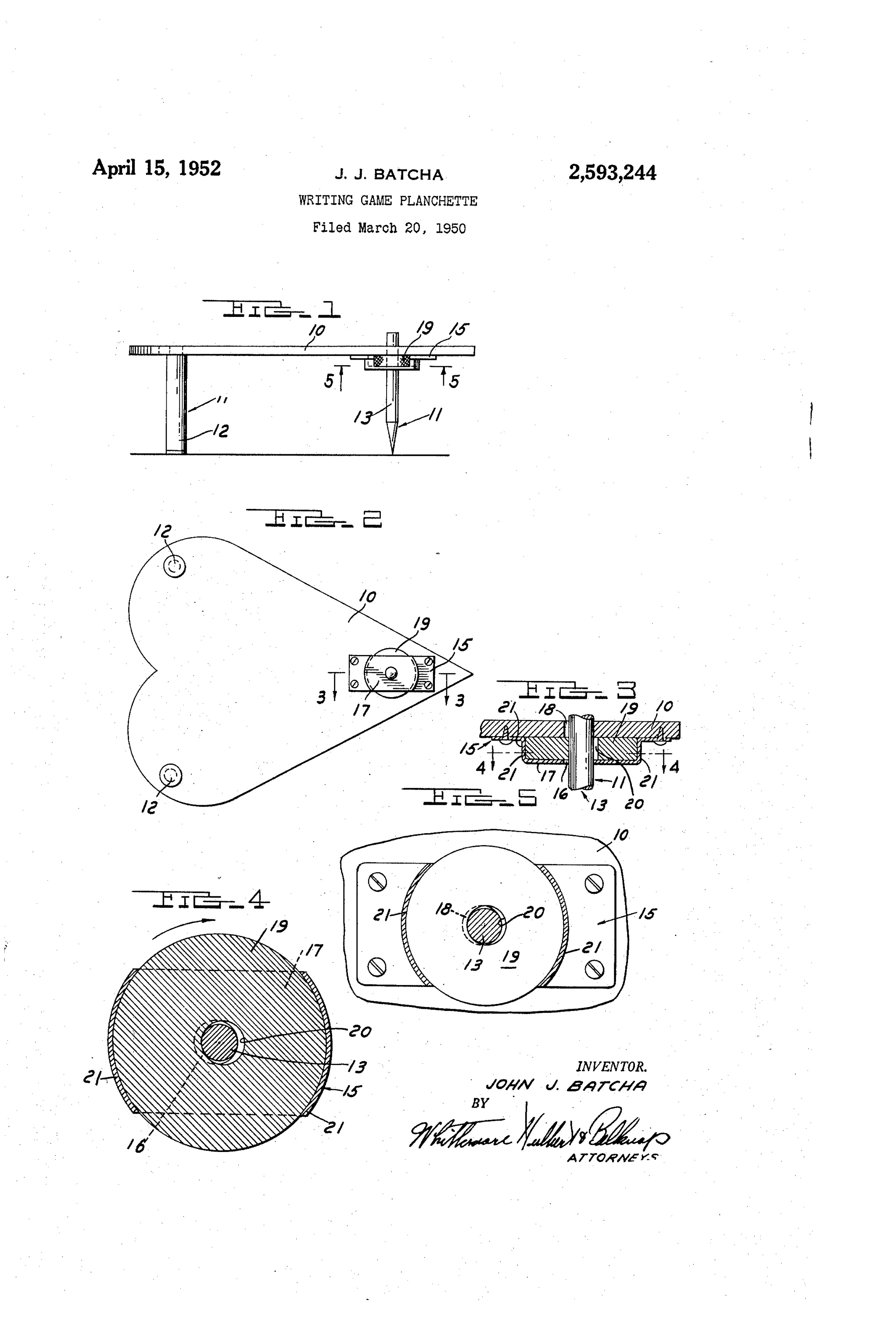
US 2,593,244, Writing Game Planchette, sheet 1
Writing Game Planchette US 2,593,244 · John J. Batcha, Detroit, Michigan Filed 20 March 1950 · granted 15 April 1952 The plainest statement of the writing planchette in the patent record: three feet, the front one a pencil. A turning disc with an off-centre hole clamps the pencil or frees it for sharpening, and two sliding supports carry the back. It cites the Jenness stylus guide of 1923. These are the same three points my own planchettes stand on. The full patent (PDF, 278 KB) · Google Patents

II.The Pointers

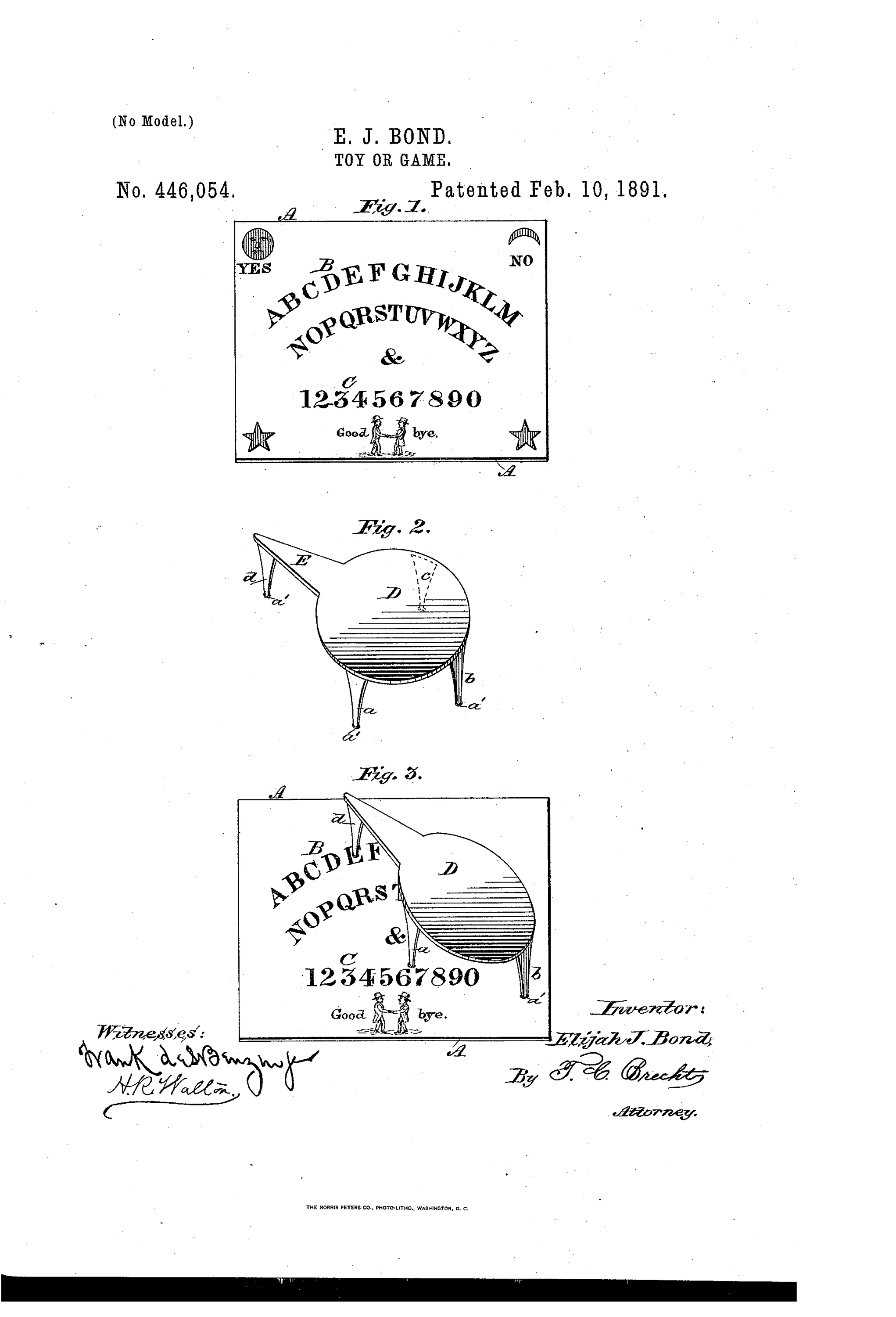
US 446,054, Toy or Game (the Ouija board), sheet 1
Toy or Game (the Ouija board) US 446,054 · Elijah J. Bond, Baltimore, Maryland Filed 28 May 1890 · granted 10 February 1891 The Ouija patent, assigned to Charles W. Kennard and William H. A. Maupin, and with it the first patented talking-board planchette: a small table, a disk on four legs with a tongue for its pointer, each leg tipped with felt so that it neither scratches the board nor creaks. The full patent (PDF, 181 KB) · Google Patents
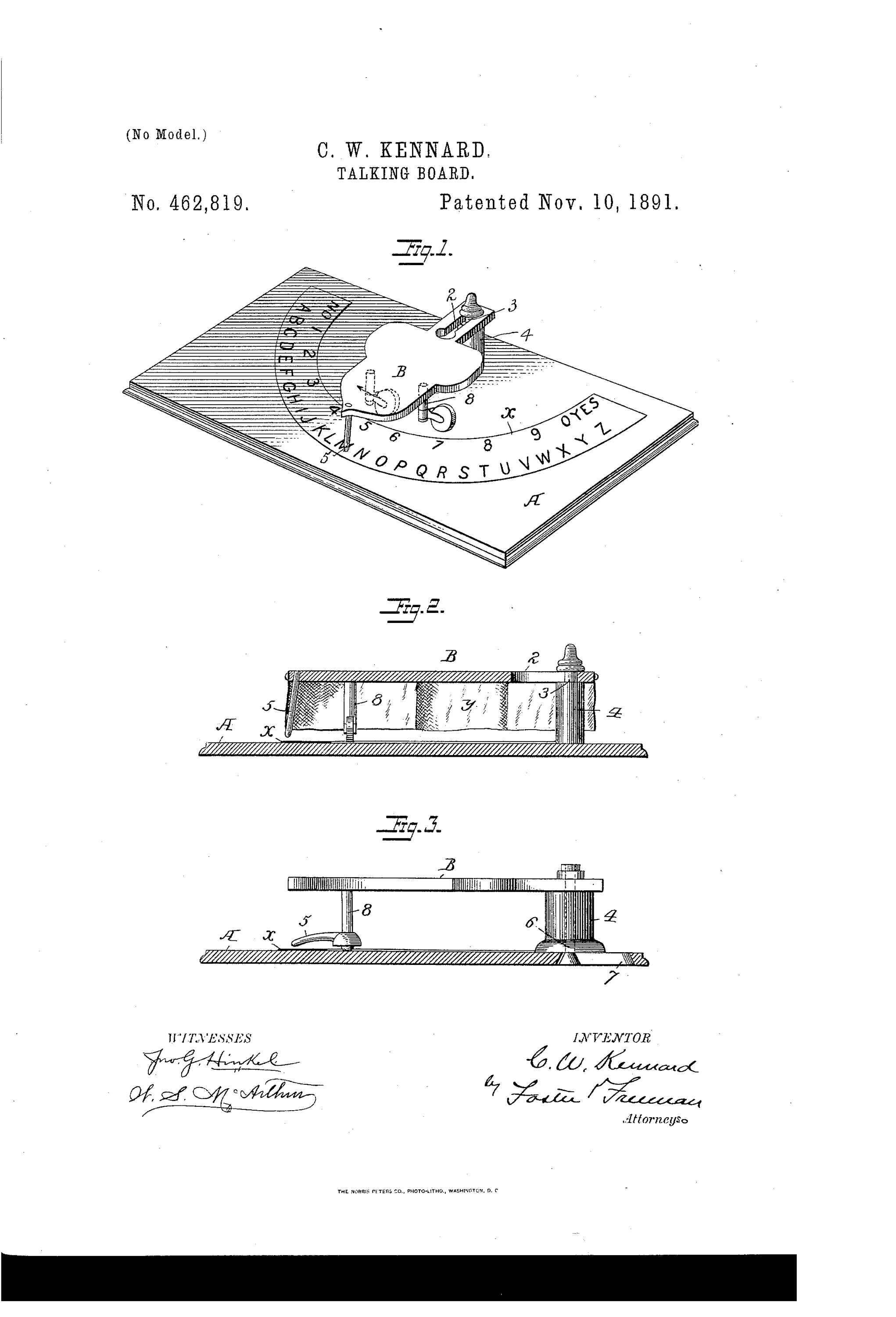
US 462,819, Talking-Board, sheet 1
Talking-Board US 462,819 · Charles W. Kennard, Baltimore, Maryland Filed 18 February 1891 · granted 10 November 1891 Kennard's own improvement, which never went into production: a pointer table on castors, guided by a pin in a slot so that it can only swing and slide over the letters laid out along concentric curves. The full patent (PDF, 237 KB) · Google Patents
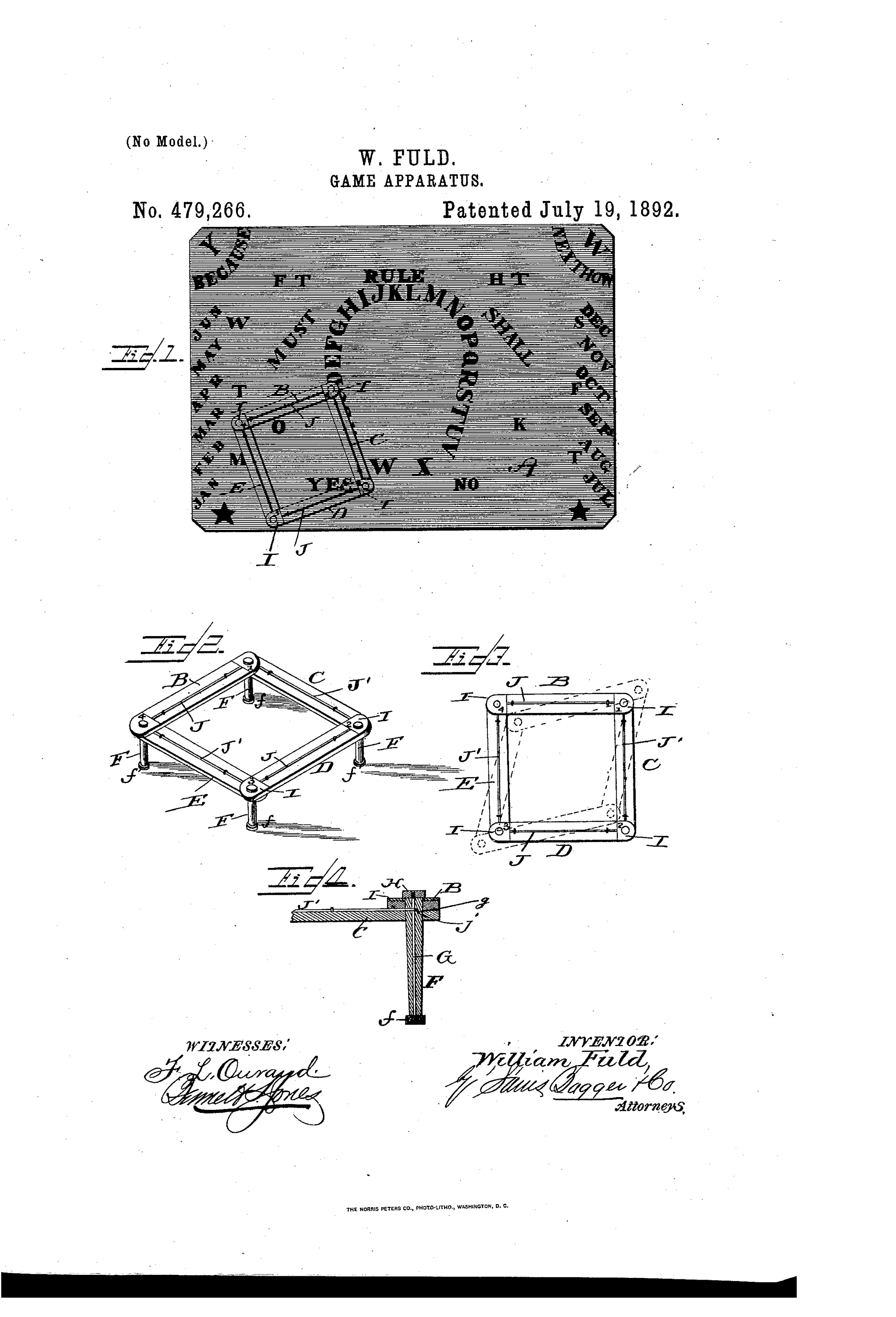
US 479,266, Game Apparatus, sheet 1
Game Apparatus US 479,266 · William Fuld, Baltimore, Maryland Filed 28 March 1892 · granted 19 July 1892 Fuld's first patent, and the one that says the frame will move “by the involuntary muscular motion of the hands of the players, or through some other agency.” The full patent (PDF, 380 KB) · Google Patents
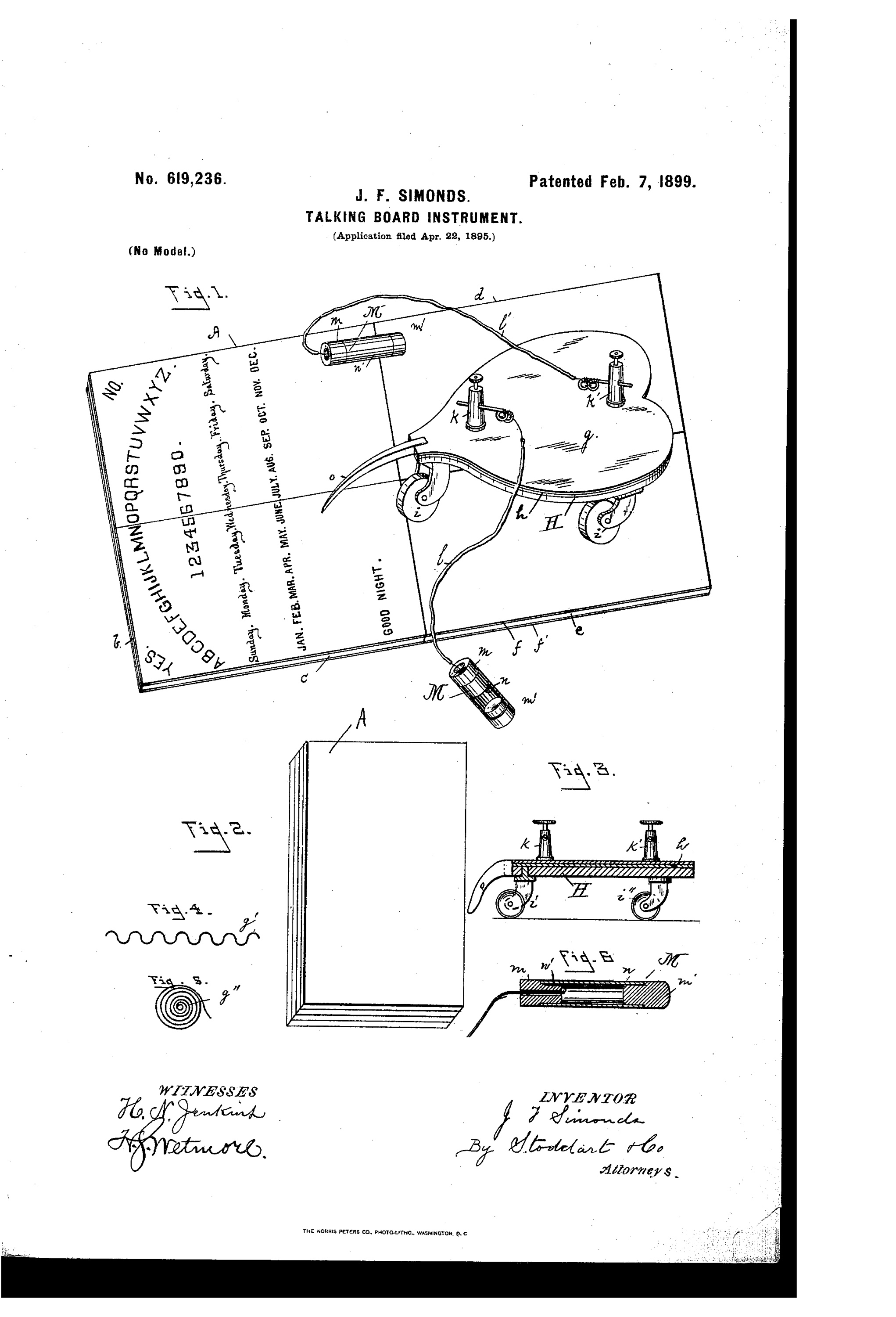
US 619,236, Talking-Board Instrument, sheet 1
Talking-Board Instrument US 619,236 · Justin F. Simonds, Washington, District of Columbia Filed 22 April 1895 · granted 7 February 1899 A heart-shaped carriage on three castors with a pointer at its front, and a copper plate insulated from its top and wired to two metal handles held by the sitters. The full patent (PDF, 255 KB) · Google Patents
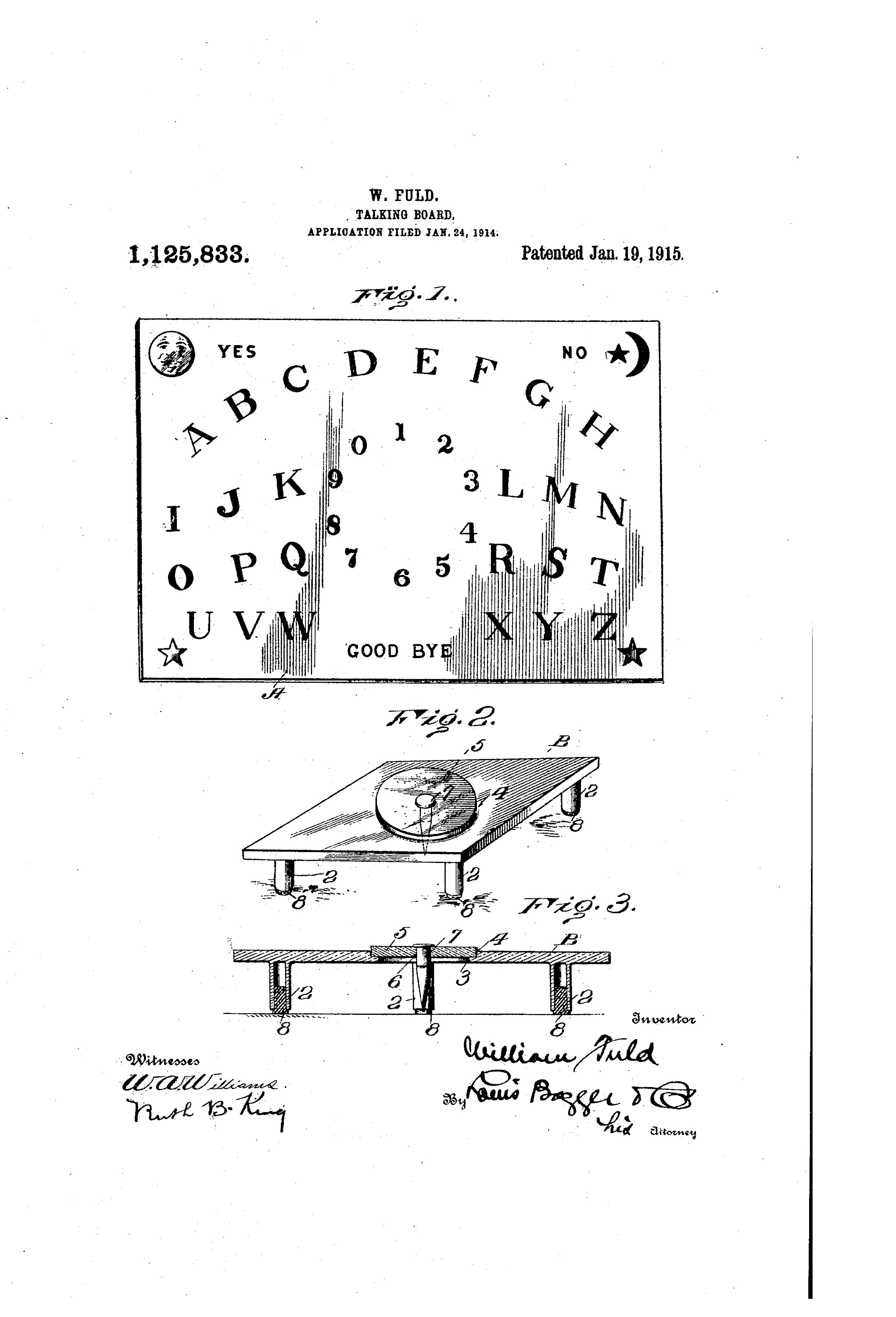
US 1,125,833, Talking-Board, sheet 1
Talking-Board US 1,125,833 · William Fuld (assigned to Carrie Fuld), Baltimore, Maryland Filed 24 January 1914 · granted 19 January 1915 The window. A disk of glass set into the planchette lets the sitters see the letters beneath, a pointer passes through it, and the table stands on hollow metal legs with felt pads. Every windowed pointer since, mine included, looks through this one. The full patent (PDF, 181 KB) · Google Patents
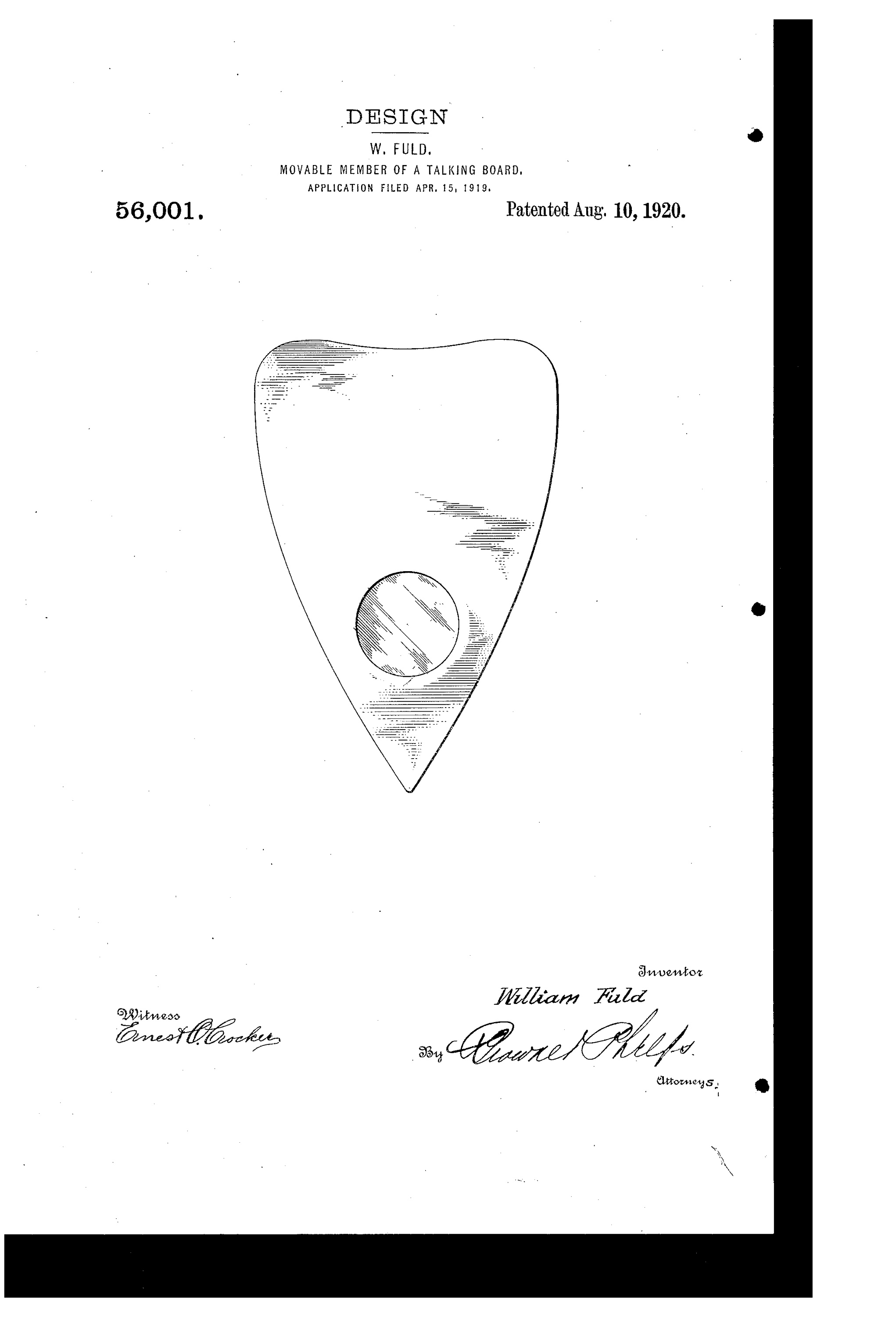
US Design 56,001, Design for the Movable Member of a Talking-Board, sheet 1
Design for the Movable Member of a Talking-Board US Design 56,001 · William Fuld, Baltimore, Maryland Filed 15 April 1919 · granted 10 August 1920 The shape the world now draws when it draws a planchette: the long heart, pointed at the tip, with a round window near it. The full patent (PDF, 51 KB) · Google Patents
US Design 56,085, Design for a Finger-Rest and Pointer for a Game, sheet 1
Design for a Finger-Rest and Pointer for a Game US Design 56,085 · John Vanderkamp, Cleveland, Ohio Filed 19 April 1920 · granted 10 August 1920 A triangle with rounded corners, a window at its centre and a point at one corner, on short feet. The full patent (PDF, 112 KB) · Google Patents
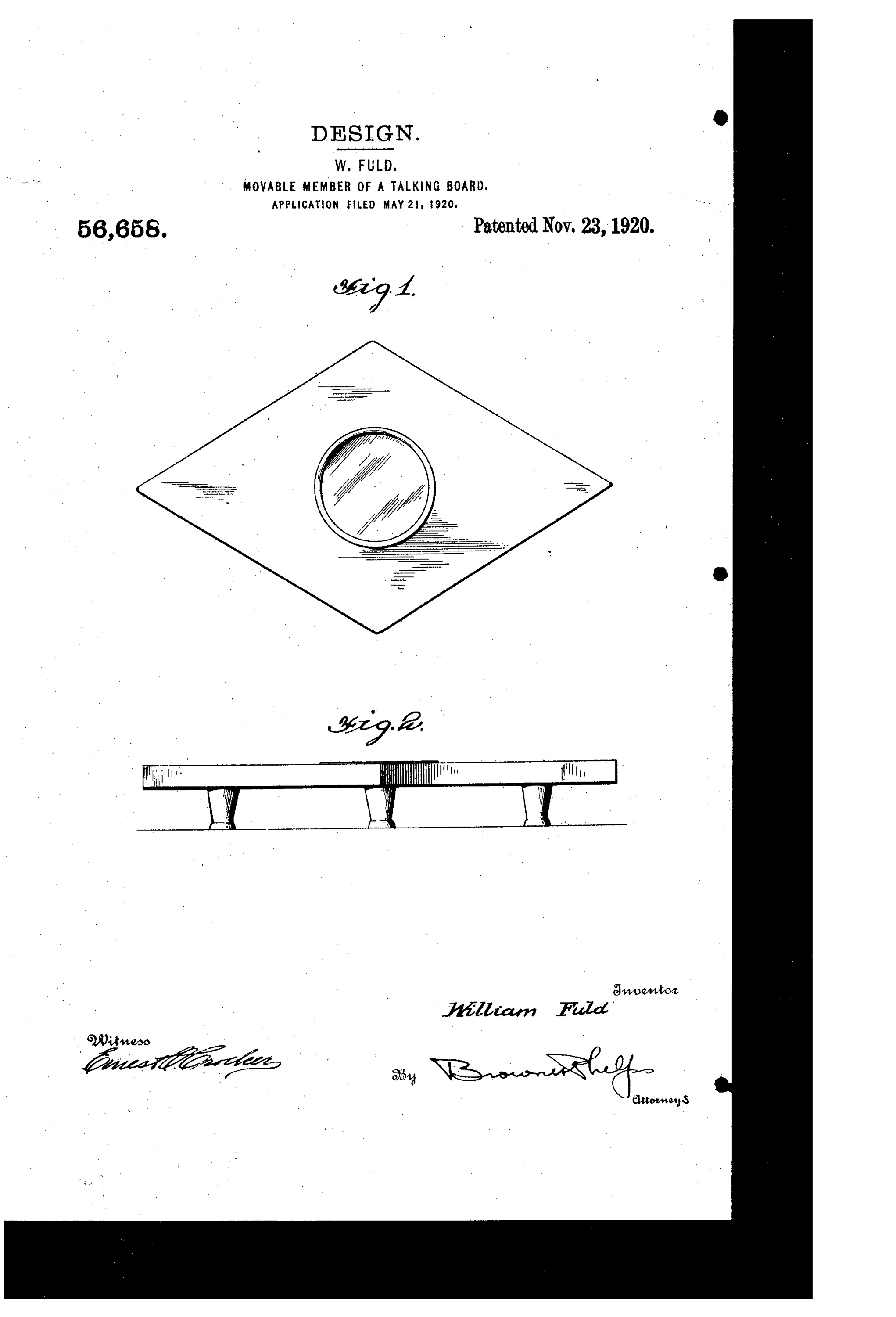
US Design 56,658, Design for the Movable Member of a Talking-Board, sheet 1
Design for the Movable Member of a Talking-Board US Design 56,658 · William Fuld, Baltimore, Maryland Filed 21 May 1920 · granted 23 November 1920 Fuld again, three months later: a diamond on four legs, with the round window in the middle. The full patent (PDF, 77 KB) · Google Patents
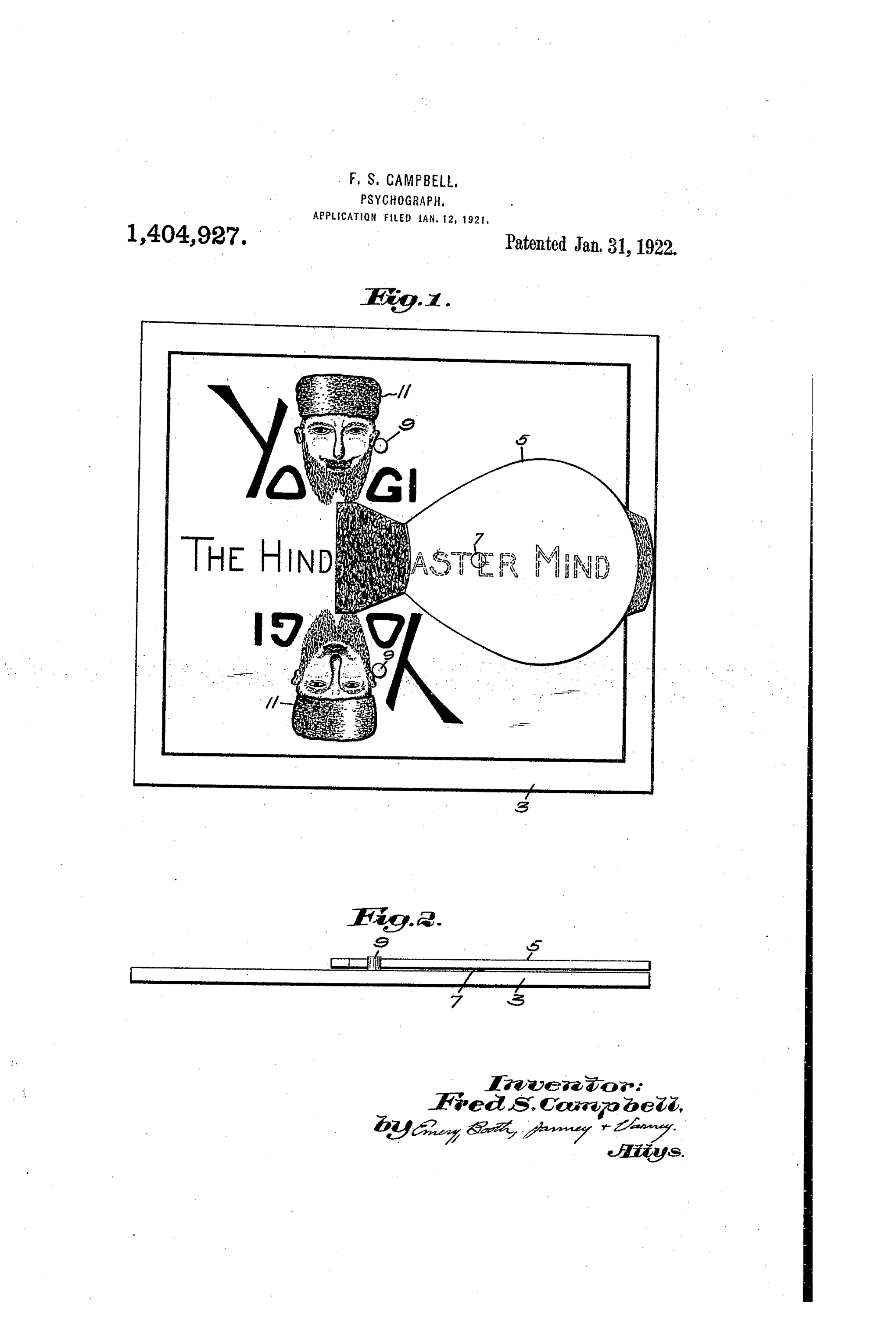
US 1,404,927, Psychograph, sheet 1
Psychograph US 1,404,927 · Fred S. Campbell, Lynn, Massachusetts Filed 12 January 1921 · granted 31 January 1922 A planchette shaped like an incense burner, swivelled on its base so that it swings in a short arc under the hands and raps against one of two posts: the knock of the séance table, built into the pointer. The drawing names it Yogi, the Hindu Master Mind. The full patent (PDF, 265 KB) · Google Patents
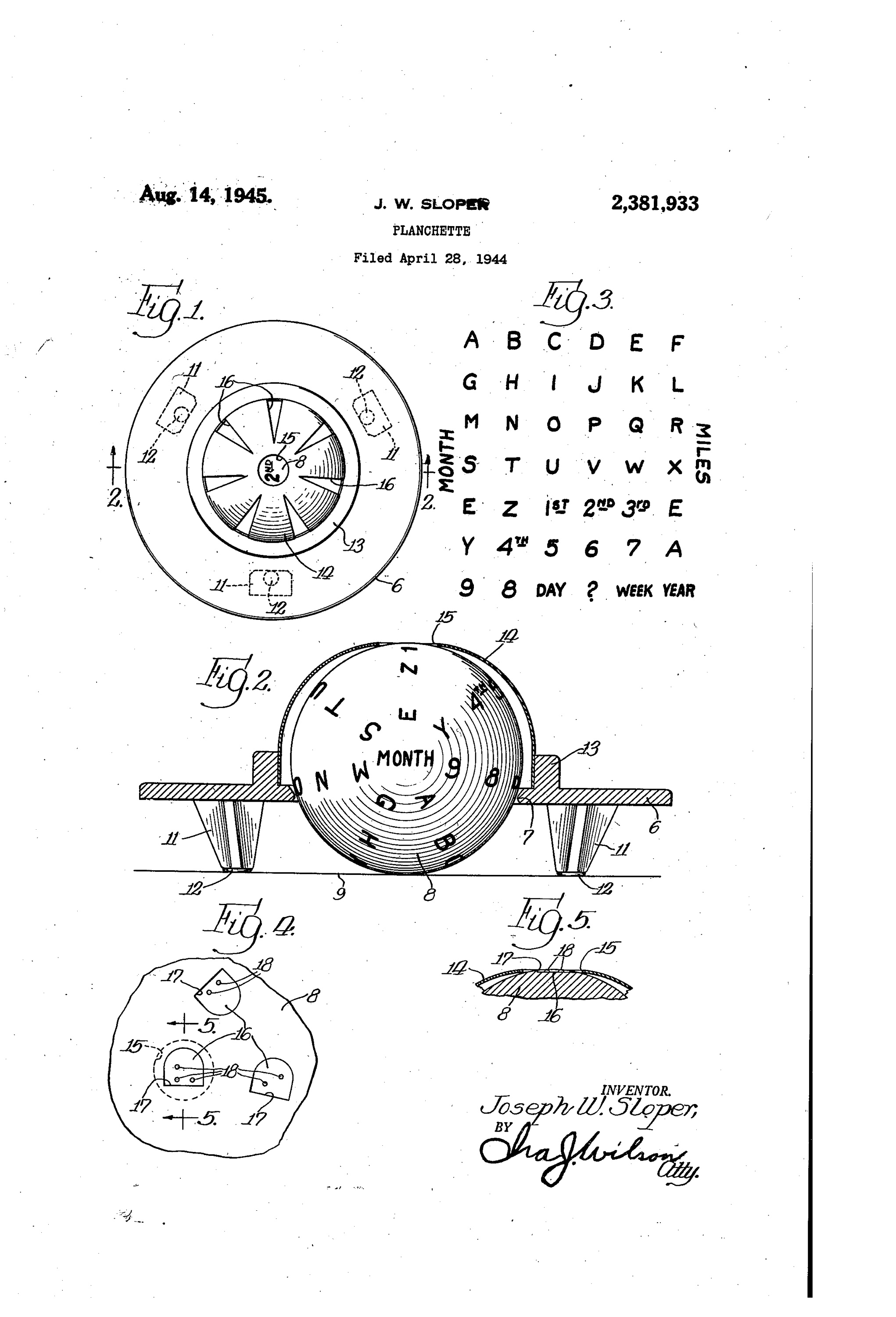
US 2,381,933, Planchette, sheet 1
Planchette US 2,381,933 · Joseph W. Sloper, Crystal Lake, Illinois Filed 28 April 1944 · granted 14 August 1945 A round finger board on slide-caster legs, with a wooden ball beneath it rolling on the table; a dome over the ball has a small sight opening, and the characters on the ball turn into view as the board is pushed. The full patent (PDF, 341 KB) · Google Patents
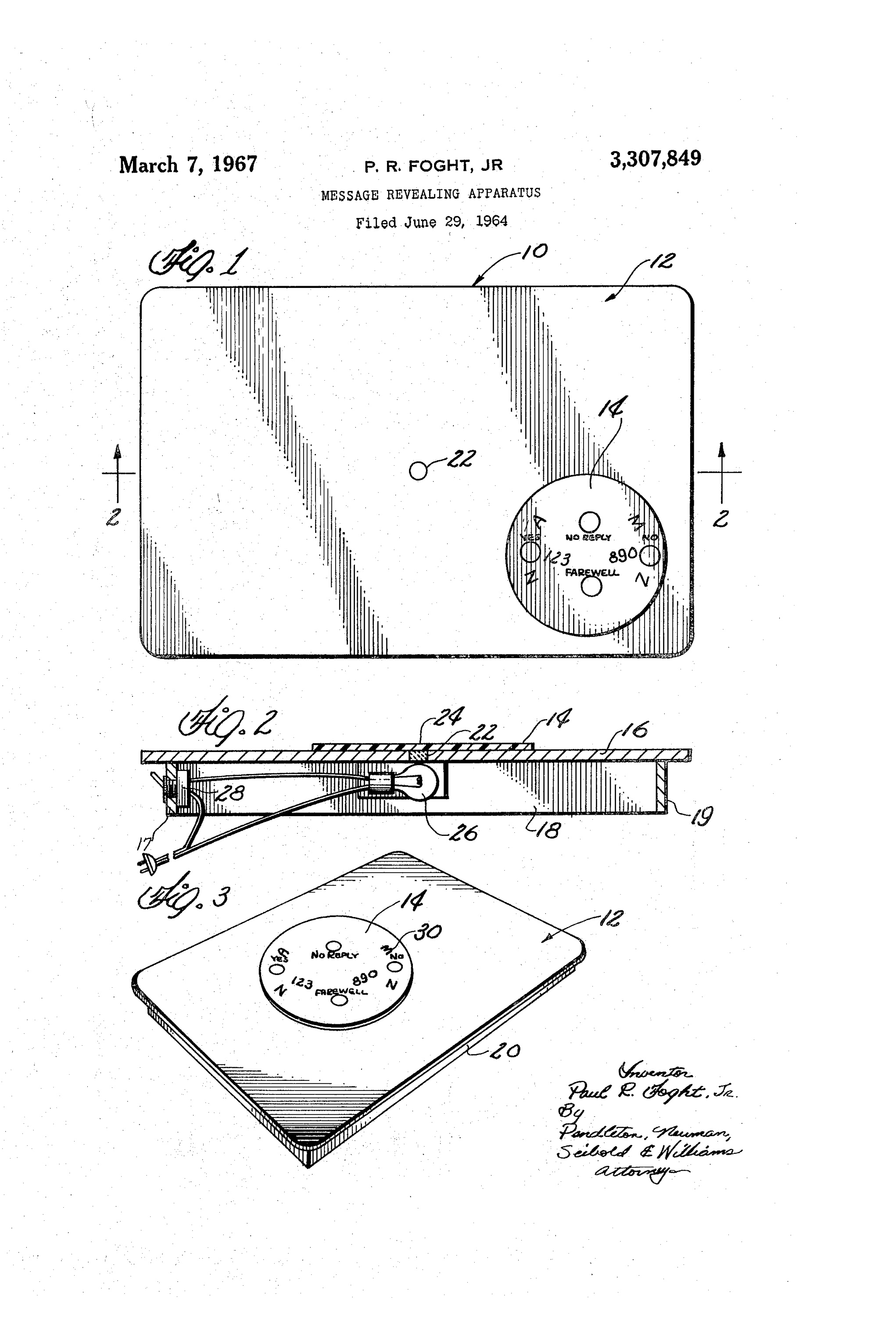
US 3,307,849, Message Revealing Apparatus, sheet 1
Message Revealing Apparatus US 3,307,849 · Paul R. Foght, Jr., Kenosha, Wisconsin Filed 29 June 1964 · granted 7 March 1967 A disk-shaped planchette whose characters light up when it passes over a lit opening in the table: the window turned inside out. The full patent (PDF, 327 KB) · Google Patents
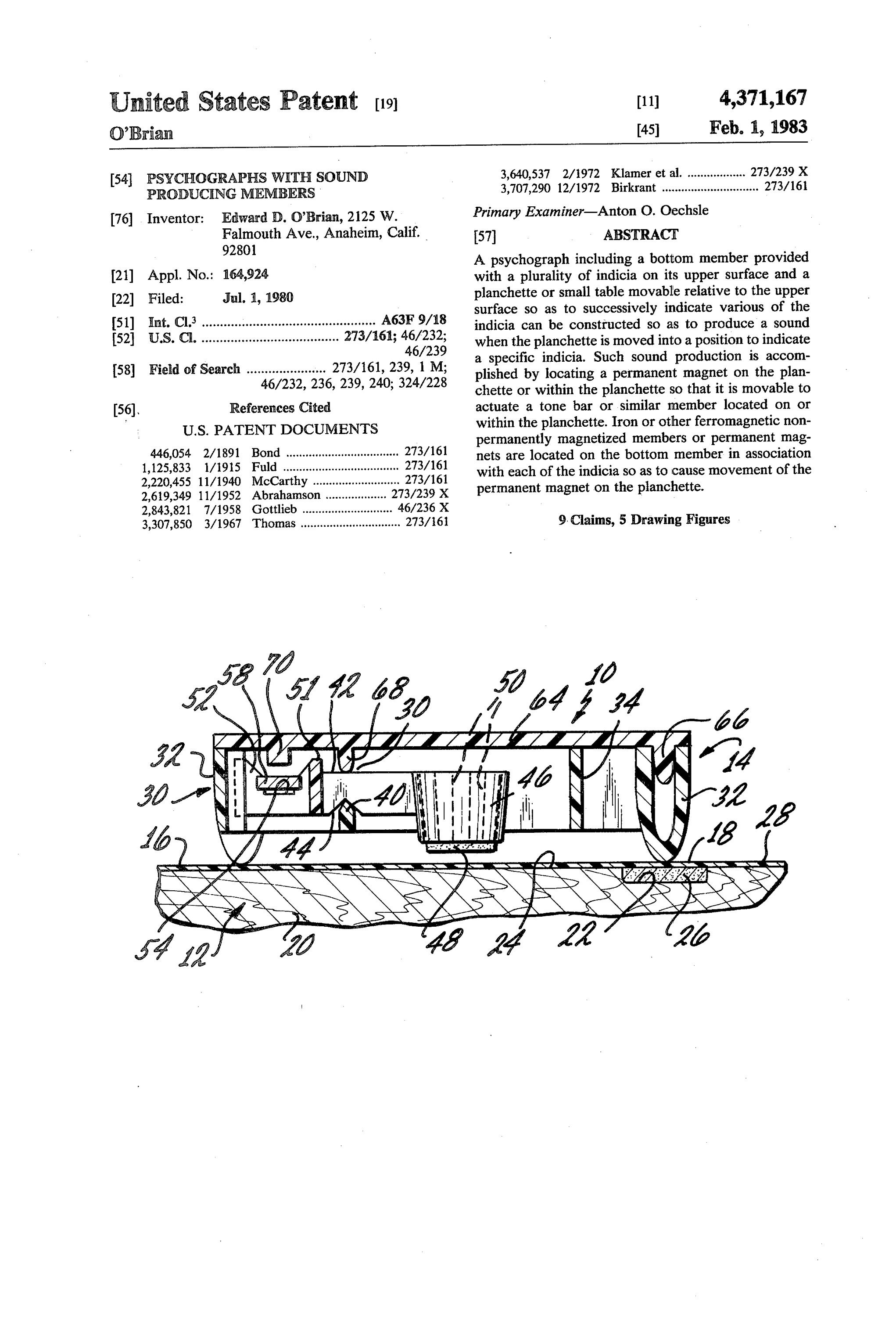
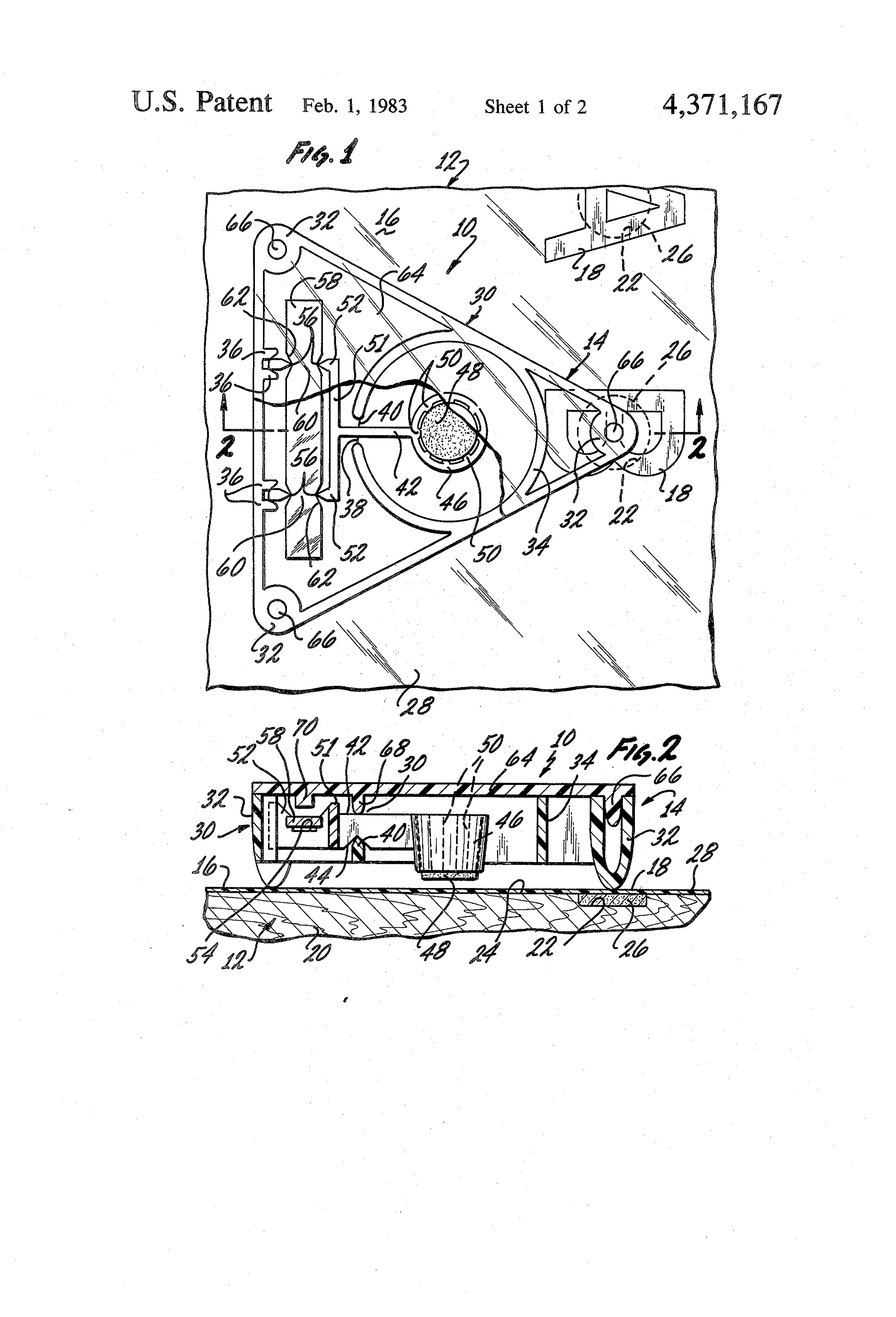
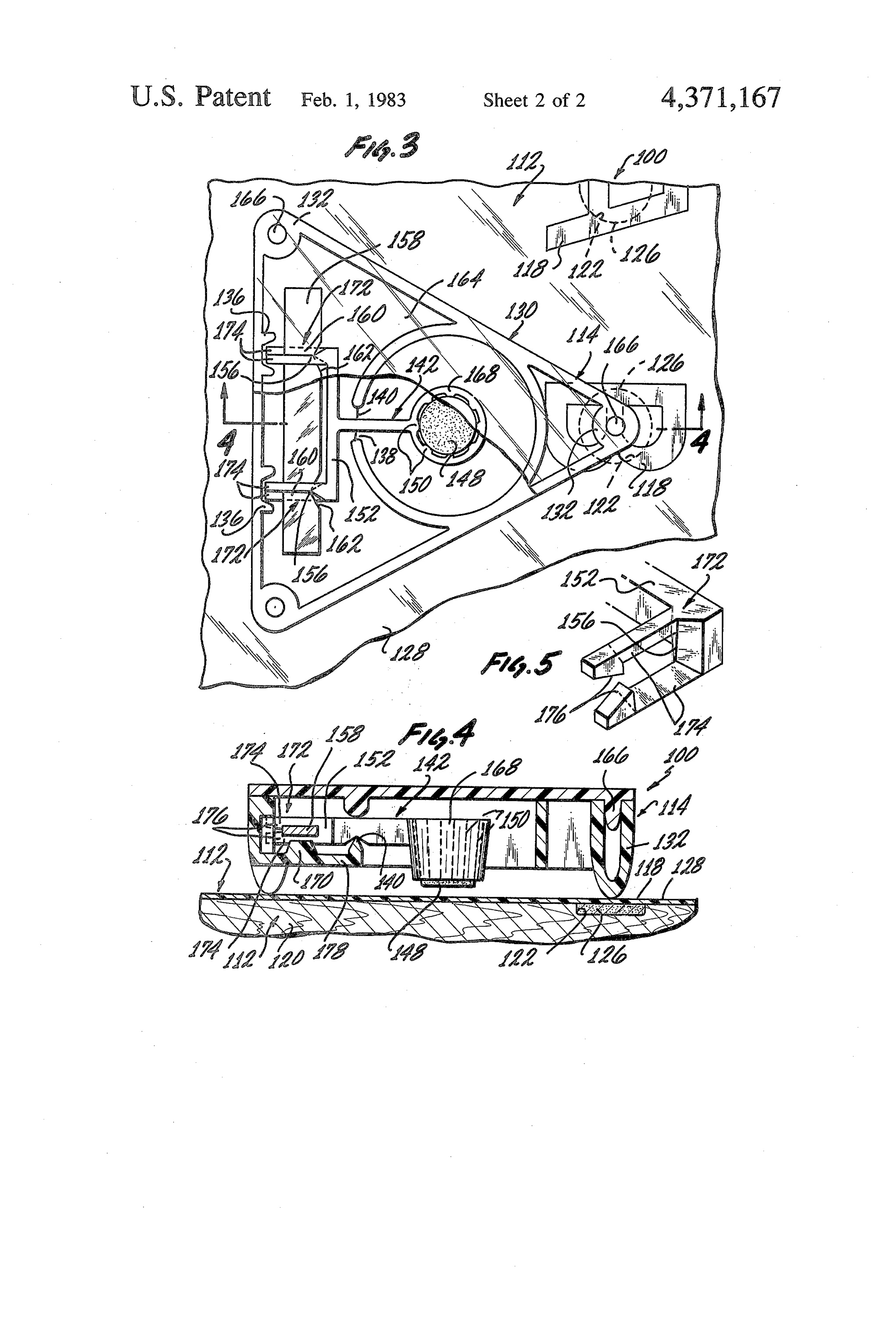
US 4,371,167, Psychographs with Sound Producing Members, sheet 1US 4,371,167, Psychographs with Sound Producing Members, sheet 2US 4,371,167, Psychographs with Sound Producing Members, sheet 3
Psychographs with Sound Producing Members US 4,371,167 · Edward D. O'Brian, Anaheim, California Filed 1 July 1980 · granted 1 February 1983 A planchette that rings: a magnet on a lever inside it is drawn down over iron beneath each letter, and a tone bar strikes. The full patent (PDF, 829 KB) · Google Patents
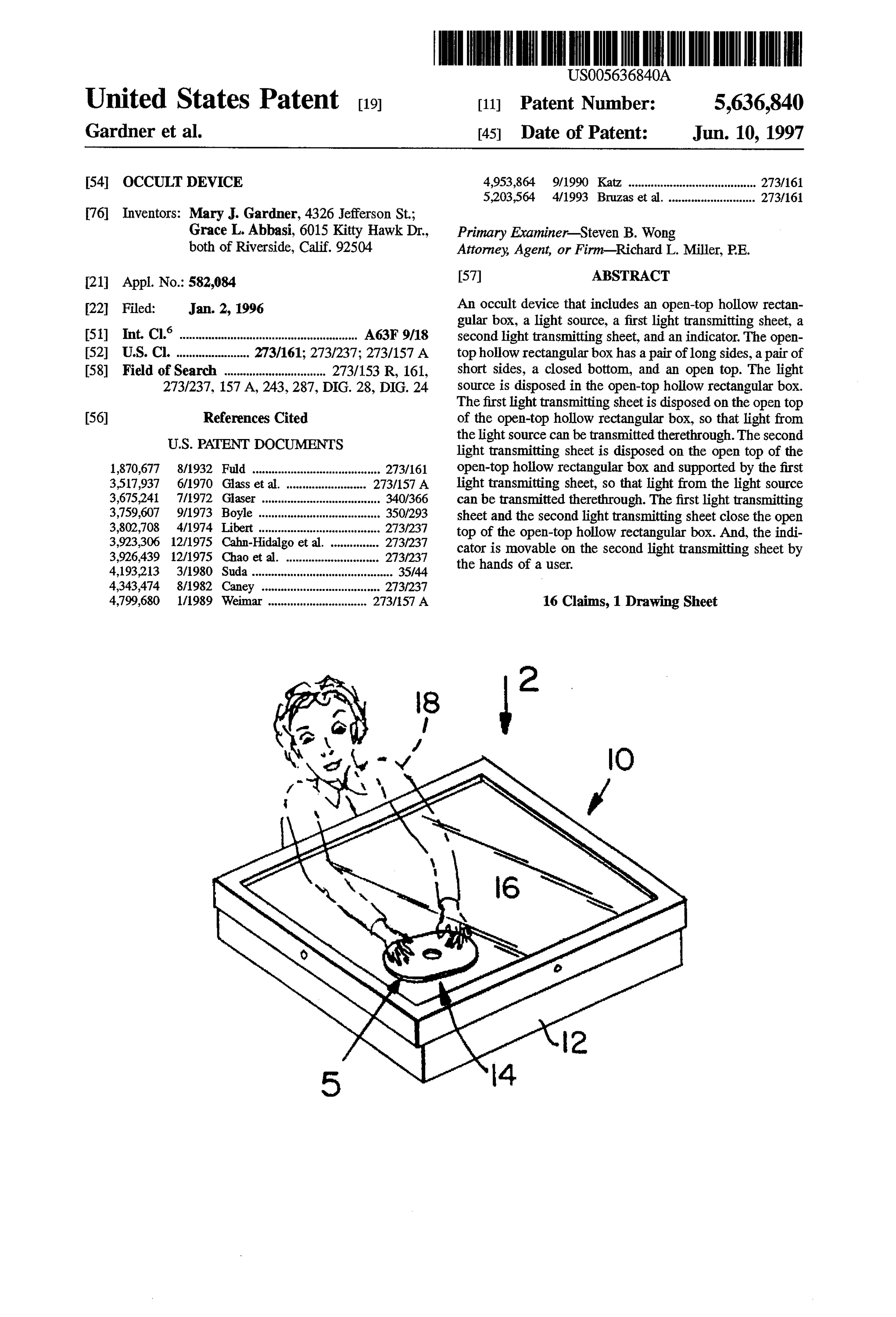
US 5,636,840, Occult Device, sheet 1US 5,636,840, Occult Device, sheet 2
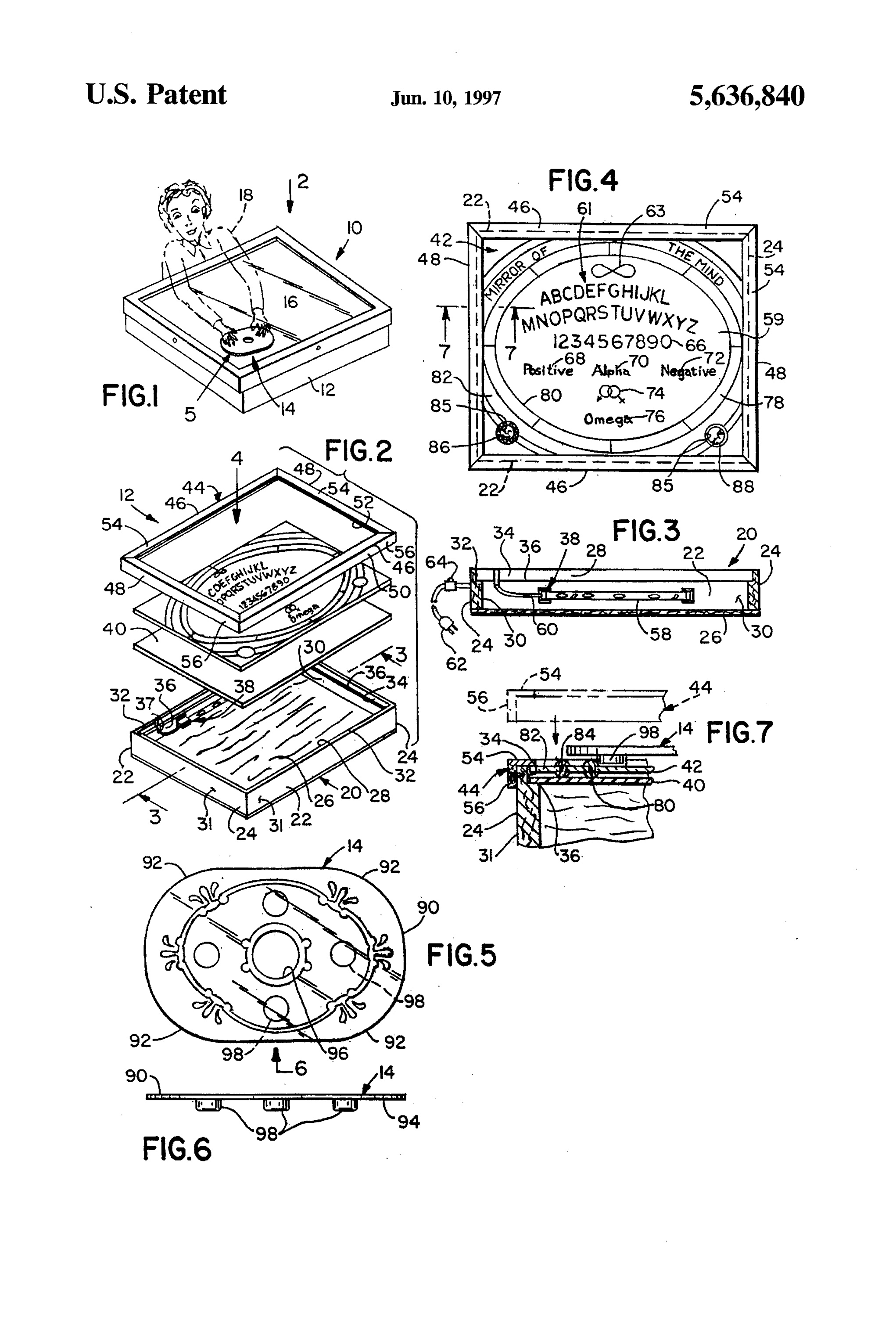
Occult Device US 5,636,840 · Mary J. Gardner and Grace L. Abbasi Filed 2 January 1996 · granted 10 June 1997 The last of the line I have found: a jewelled acrylic indicator on four half-inch legs, moved by the fingertips over an illuminated mirror etched with letters and numbers, in an oak box with stained glass. The full patent (PDF, 1273 KB) · Google Patents

III.Planchettes in Name Only

US 969,935, Planchette Game Apparatus, sheet 1
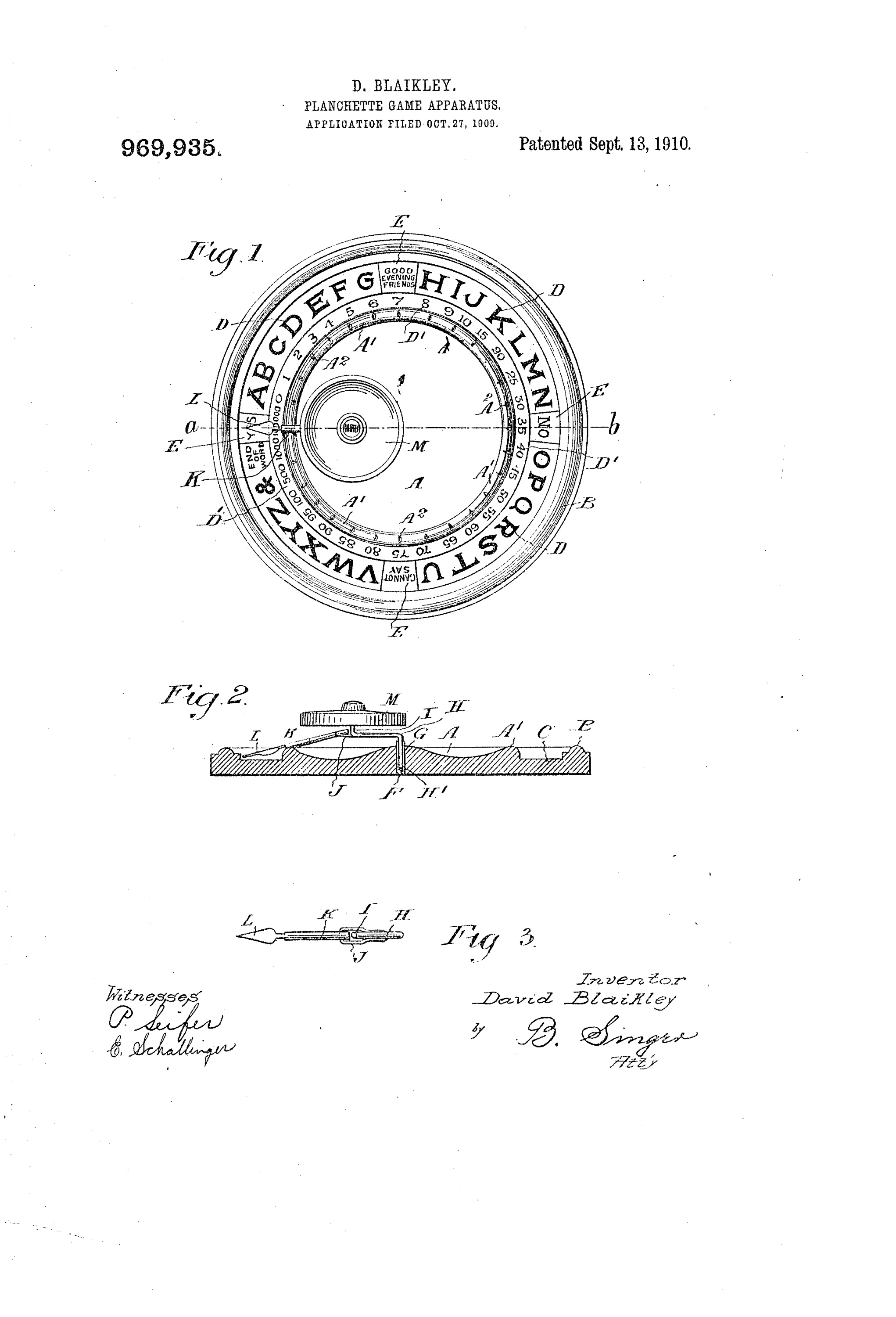
Planchette Game Apparatus US 969,935 · David Blaikley, Glasgow, Scotland Filed 27 October 1909 · granted 13 September 1910 A crank arm swinging from the centre of a base, its pointer travelling over notches around a raised ridge while the hand rests on a disk on the arm. No pencil: a planchette by name, a dial by nature. The full patent (PDF, 272 KB) · Google Patents
US 1,091,206, Planchette Device, sheet 1
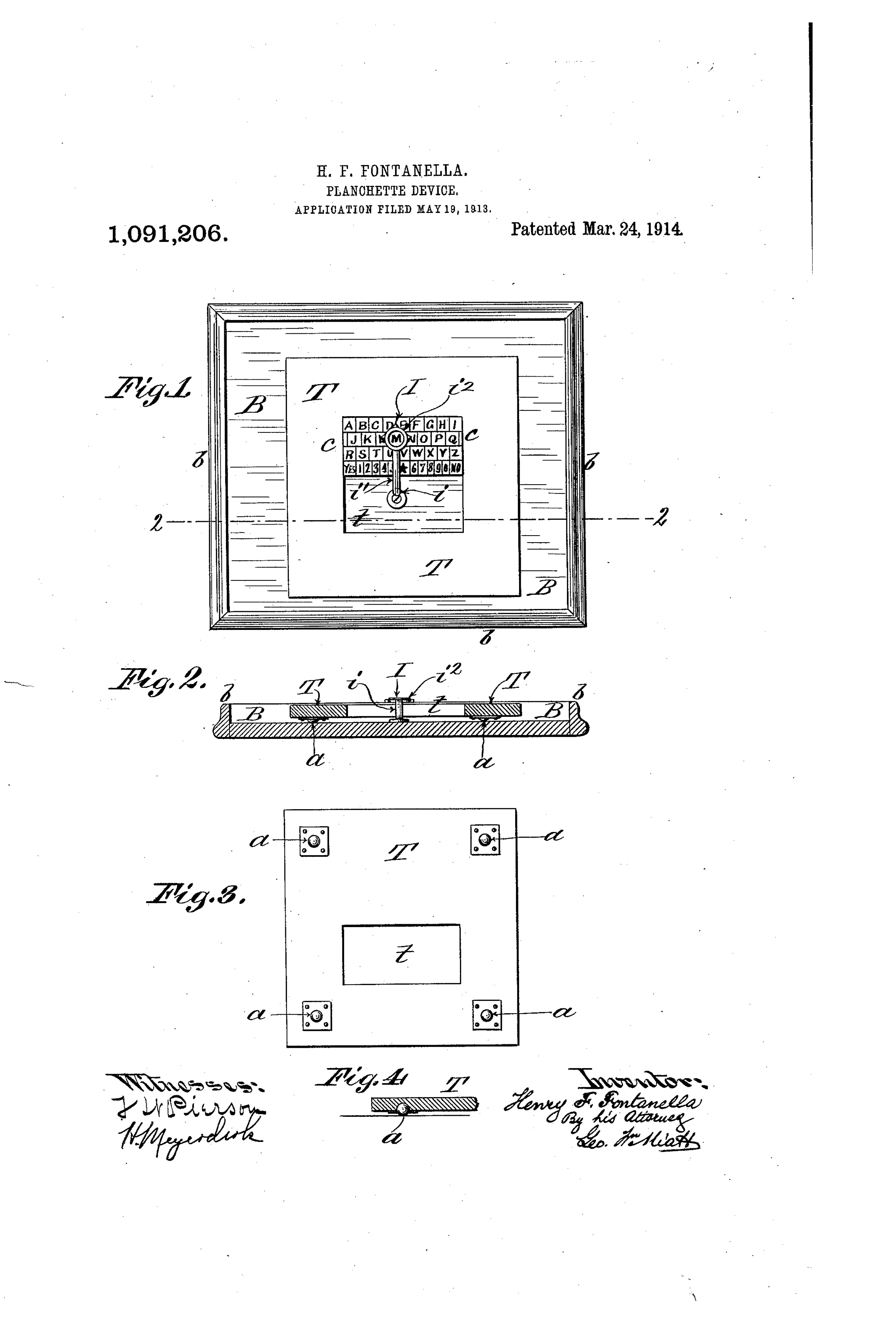
Planchette Device US 1,091,206 · Henry F. Fontanella, New York Filed 19 May 1913 · granted 24 March 1914 The board moves instead of the pointer: a finger table printed with characters rides on balls over a base with a fixed indicator. The full patent (PDF, 240 KB) · Google Patents
US 1,366,174, Planchette, sheet 1
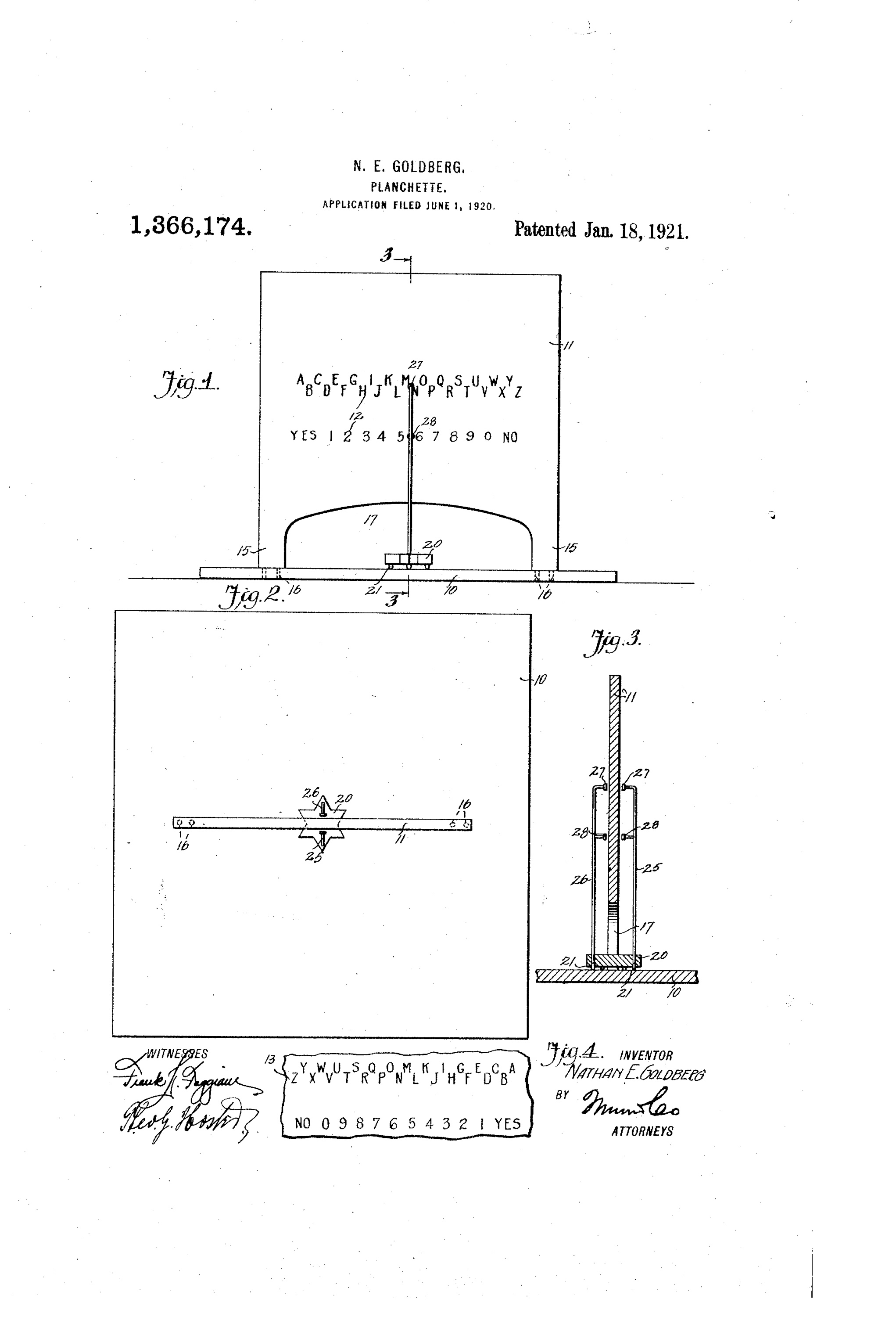
Planchette US 1,366,174 · Nathan E. Goldberg, New York Filed 1 June 1920 · granted 18 January 1921 A star-shaped table on a base, with two pointers that indicate letters, digits, Yes and No on an upright board. The full patent (PDF, 368 KB) · Google Patents

IV.What the Record Shows

Read in order, the drawings tell the story of the little board better than any history. The writer arrives finished and is hardly touched for eighty years: Jenness adds a spring in 1923, Batcha a clamp in 1952, and the three points stay where Paris put them. The pointer, meanwhile, is reinvented every few years: felt feet in 1891, a pin in a slot the same year, a copper plate and wires in 1899, the glass window in 1915, the shape everyone knows in 1920, a ball, a lamp, a bell. None of these patents claims that the board works, and none of the examiners was asked. They record what people built for the question, and in what form they wanted to hold it.

The planchettes I make   Enquire